Mastering Aesthetic Minimalist Still Life Photography: Essential Tips and Techniques
 Posted On
In the world of photography, minimalist still life captures the essence of simplicity with striking elegance. I’ve found that this art form, which emerged from the minimalist movement of the 1950s, embodies the timeless principle that “less is more.” It’s an approach that strips away the unnecessary to reveal the extraordinary in ordinary objects.
Through careful composition and the masterful use of negative space, minimalist still life photography transforms simple subjects into powerful visual statements. I’m particularly drawn to how this style isolates objects against neutral backgrounds, creating a sense of calm and serenity that’s increasingly rare in our cluttered world. By focusing on basic elements like shadows, lines, and geometric shapes, these images achieve a delicate balance that invites contemplation rather than overwhelming the viewer with complexity.
Understanding Minimalist Still Life Photography
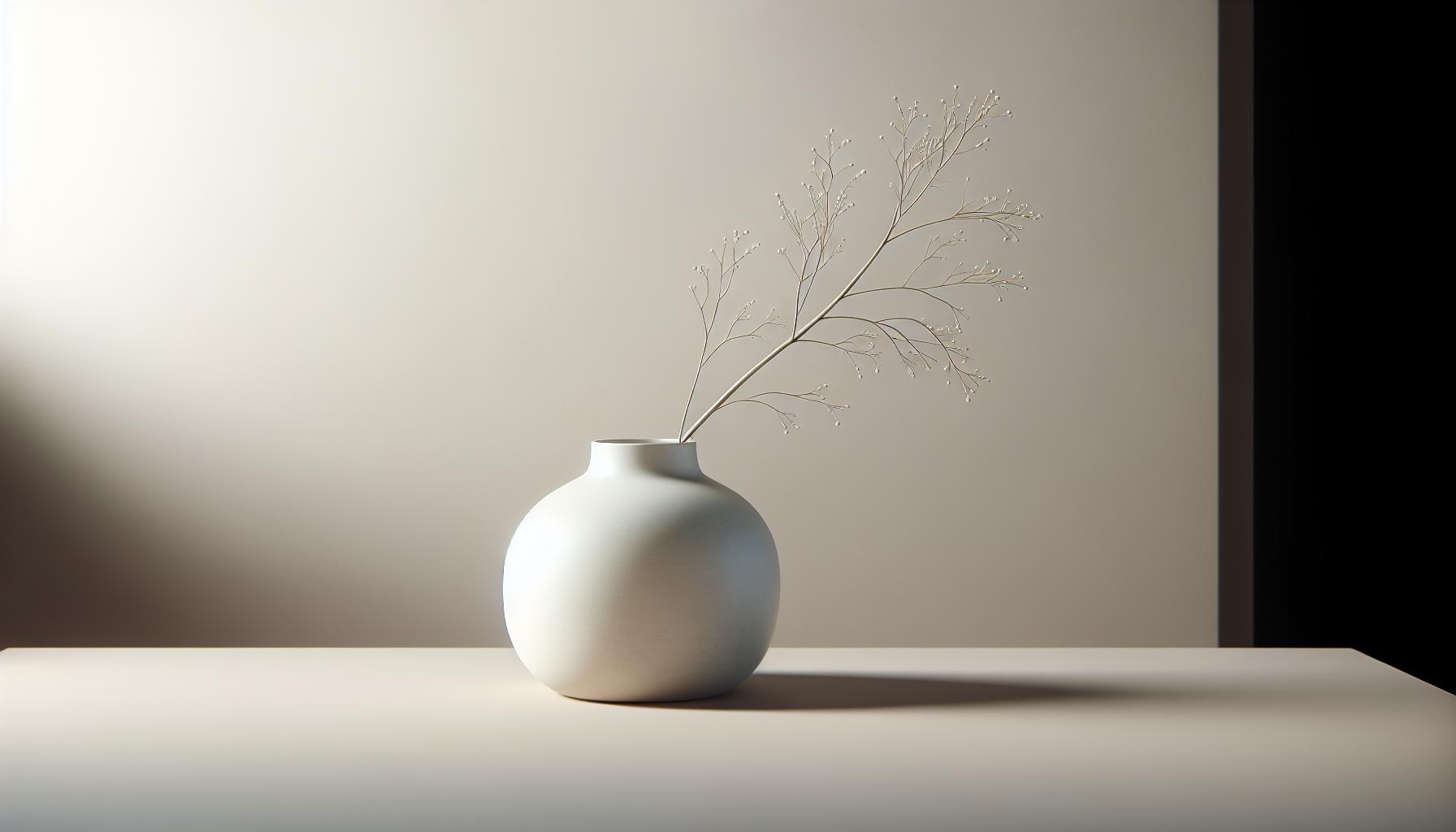
Aesthetic minimalist still life photography strips away visual complexity to reveal the essence of everyday objects. The approach emphasizes clean compositions, deliberate framing, and thoughtful arrangement of subjects.
Key Elements of Minimalist Aesthetics
- Simple color palettes focus attention on form and texture
- Geometric shapes create visual balance and harmony
- Clean lines guide the viewer’s eye through the composition
- Monochromatic schemes reduce visual distractions
- Symmetrical arrangements establish order and structure
Key Compositional Elements
|
Purpose
|
Single Subject Focus
|
Creates immediate visual impact
Neutral Backgrounds
|
Eliminates competing elements
Strategic Lighting
|
Enhances form and shadows
Limited Color Palette
|
Maintains visual simplicity
The Art of Negative Space
Negative space transforms aesthetic minimalist still life photography by:
- Creating breathing room around the subject
- Emphasizing the main subject through isolation
- Balancing compositional weight
- Directing viewer focus to specific details
- Adding depth through spatial relationships
Negative Space Techniques
|
Effect
|
Subject Placement
|
Controls visual hierarchy
Background Selection
|
Enhances subject isolation
Frame Division
|
Creates compositional rhythm
Edge Spacing
|
Maintains visual balance
Empty Areas
|
Essential Equipment and Setup

Creating aesthetic minimalist still life photography requires a carefully curated set of equipment and a thoughtful setup process. I use specific tools and techniques to achieve clean, striking compositions that embody minimalist principles.
Lighting Techniques
I rely on these fundamental lighting setups for minimalist still life photography:
- A large softbox (24×36 inches) positioned at 45 degrees creates soft, wraparound light
- LED continuous lights enable precise control over shadow placement
- White foam boards serve as fill reflectors to manage contrast
- Black flags or cards block unwanted light spill
- A light meter ensures consistent exposure across sessions
| Lighting Type | Primary Use | Ideal Distance |
|---|---|---|
| Natural Window Light | Soft shadows | 3-6 feet |
| LED Panel | Even illumination | 2-4 feet |
| Strobe with Softbox | Controlled highlights | 4-8 feet |
- Seamless paper in white gray or black (53-inch width)
- Acrylic sheets for reflective surfaces
- Matte boards in neutral colors
- Simple geometric objects like cubes spheres cylinders
- Textured fabrics without patterns
- Non-reflective ceramic vessels
- Plain wooden blocks or platforms
| Background Material | Best Use Case | Maintenance |
|---|---|---|
| Seamless Paper | Clean backdrops | Replace every 15-20 sessions |
| Acrylic Sheet | Reflective base | Clean after each use |
| Matte Board | Vertical surfaces | Store flat avoid bending |
Composition Principles

In aesthetic minimalist still life photography, composition serves as the foundation for creating visually compelling images. I focus on fundamental principles that emphasize simplicity while maintaining visual impact.
Rule of Thirds in Minimalism
The rule of thirds transforms minimalist still life compositions by dividing the frame into a 3×3 grid. I place key elements along these grid lines or at their intersections to create visual tension. This technique works particularly well in aesthetic minimalist still life photography when:
- Positioning a single object off-center to create asymmetrical balance
- Aligning horizontal lines with the upper or lower third
- Placing negative space in two-thirds of the frame
- Using the grid intersections to highlight subtle details
- Creating depth through strategic object placement
Balance and Symmetry
Balance in minimalist still life photography emerges through careful weight distribution across the frame. I achieve this through:
- Centering objects for formal symmetry
- Contrasting light objects against dark backgrounds
- Offsetting large elements with smaller complementary shapes
- Using geometric forms to create visual harmony
- Distributing negative space evenly around central subjects
- Balancing color intensity between elements
- Creating mirror-like reflections for perfect symmetry
These compositional choices establish a sense of order while maintaining visual interest in minimalist photographs. Each element occupies a deliberate position that contributes to the overall aesthetic balance.
Creating Visual Impact
In aesthetic minimalist still life photography, I create powerful visual statements through deliberate manipulation of fundamental elements. The careful orchestration of these elements transforms simple scenes into compelling compositions.
Color Psychology
Color selection forms the emotional core of minimalist still life photographs. I employ monochromatic schemes or limited color palettes to evoke specific responses:
- White represents purity creates an airy ethereal atmosphere
- Black conveys sophistication adds dramatic depth
- Earth tones establish warmth ground the composition
- Pastels introduce subtle emotion without overwhelming
- Complementary colors create controlled tension through strategic placement
A selective approach to color strengthens the minimalist aesthetic by eliminating distracting elements while maintaining visual interest.
Texture and Form
Texture and form serve as foundational elements in my minimalist still life compositions:
- Smooth surfaces reflect light create clean lines
- Rough textures add dimensional contrast
- Geometric shapes establish strong visual anchors
- Organic forms soften rigid compositions
- Layered elements build subtle depth
I combine contrasting textures sparingly to create visual intrigue while maintaining simplicity. The interplay between different forms – angular against curved round against linear – generates dynamic tension within the minimalist framework.
| Surface Type | Visual Effect | Best Usage |
|---|---|---|
| Matte | Reduces reflection | Primary subjects |
| Glossy | Creates highlights | Accent elements |
| Textured | Adds depth | Background detail |
| Transparent | Introduces lightplay | Compositional layers |
Post-Processing for Minimalist Photos
Post-processing transforms aesthetic minimalist still life photography into refined art pieces through careful adjustments that enhance visual simplicity. The editing process emphasizes clean lines, balanced contrast and precise tonal control.
Editing for Clean Lines
- Remove distracting elements using the spot healing brush tool
- Straighten horizontal and vertical lines for geometric precision
- Crop images to eliminate unnecessary space around subjects
- Apply selective sharpening to enhance edge definition
- Reduce noise in solid color areas for smoother transitions
- Adjust exposure to create pure whites in highlight areas
- Deepen shadows selectively to add depth without losing detail
- Fine-tune brightness levels to maintain subtle tonal gradations
- Apply curves adjustments for precise control over contrast
- Balance color temperature to achieve neutral grays
- Use selective color adjustments to remove unwanted color casts
| Adjustment Type | Purpose | Typical Range |
|---|---|---|
| Exposure | Set overall brightness | +/- 1.0 stop |
| Contrast | Define subject separation | +10 to +30 |
| Highlights | Preserve bright details | -30 to -50 |
| Shadows | Maintain dark details | +20 to +40 |
| Whites | Create clean highlights | +10 to +30 |
| Blacks | Add depth | -10 to -30 |
Conclusion
Minimalist still life photography represents a powerful artistic approach that I’ve found truly transformative in my creative journey. It’s more than just capturing simple objects – it’s about discovering beauty in simplicity and creating visual poetry through careful composition.
Every element from lighting and equipment to post-processing plays a crucial role in crafting these elegant images. I believe the true magic lies in how this style challenges us to see ordinary objects in extraordinary ways while maintaining visual clarity and purpose.
Through minimalist still life photography I’ve learned that sometimes the most impactful statements come from the quietest moments. The art of subtraction truly leads to the perfect composition.